
What Actually Happens in Your First Couples Therapy Session
Your first couples therapy session is a 60-minute relationship-mapping appointment. I hear each partner’s perspective, identify the cycle keeping you stuck, and clarify what you want to change. You don’t need to prepare a speech. Come ready to answer honestly.
Starting couples therapy can feel like walking into a room where you have to explain years of tension in one hour. You don’t. I’ll guide the conversation and help both of you slow down enough to see what has been happening beneath the arguments, distance, or resentment.
If you’ve been searching for what to expect in your first couples therapy session, here’s how I structure the first appointment for couples beginning couples therapy in Orlando and throughout Florida.
What happens before your first couples therapy session

Before the appointment, we’ll have a free consultation, complete the required intake process, and review how the first session works. You’ll arrive knowing what to expect and how we’ll use our time.
Free consultation
Everything starts with a free consultation. You can tell me what has been happening, ask questions, and get a feel for how I work.
I’ll also explain the starting process and help you decide if my approach feels like the right fit for your relationship. You should have enough information to make that decision before scheduling your first session.
Intake and expectations
Once you’re booked, you’ll complete intake paperwork covering your relationship history, current concerns, and reasons for seeking support.
I review that information before we meet so we can spend the session examining the relationship instead of using the entire hour to collect basic facts.
Therapy format
At the beginning of the appointment, I’ll explain confidentiality, the session structure, and how I create space for both partners to speak.
I also assess safety and fit because conjoint couples therapy isn’t appropriate for every relationship. Abuse, coercive control, or fear can make honest participation unsafe and may require a different form of support.
The first session is a 60-minute relationship-mapping appointment

The first appointment helps me understand your story, the concerns bringing you to therapy, and the cycle that keeps repeating between you.
We’re building a clear picture of how you arrived here and what needs attention first. That picture gives the rest of our work direction.
Reasons for starting therapy
Every couple arrives with a reason for seeking help. You may be arguing constantly, feeling more like roommates, struggling with broken trust, facing parenting stress, experiencing less intimacy, or quietly drifting apart.
You don’t need to decide which concern is serious enough to discuss. We start with what is affecting your relationship now.
Each partner’s perspective
I make space for each partner to explain how they experience the relationship. I listen for what each of you notices, needs, fears, and does when connection starts to feel uncertain.
Two people can live inside the same relationship and experience it very differently. Both perspectives give us important information about the dynamic between you.
Recurring relationship cycle
One of the first things I look for is the cycle beneath your recurring conflict.
One partner may push for a response while the other withdraws. One may go quiet while the other chases harder. The details change, but the emotional sequence often stays remarkably consistent.
I’ll describe that cycle plainly using your own words and examples. Naming it helps both of you recognize it sooner, before the same fight takes over again wearing a different outfit.
Desired outcomes
“Communicate better” is where many couples begin. We’ll turn that broad goal into something more specific.
You may want to rebuild trust, feel emotionally safe again, restore intimacy, interrupt a long-standing pattern, or handle disagreement without losing your connection.
Clear goals help us understand what meaningful progress would look like in your actual relationship.
How conflict and strong emotions are handled in the session

Conflict and emotion may show up during the appointment. I keep the conversation steady enough for us to examine what is happening instead of letting the familiar cycle run the entire session.
Real-time interaction patterns
I pay attention to the pauses, interruptions, changes in tone, defensive reactions, and emotional shifts happening between you in real time.
Those moments often reveal more about the relationship than a polished retelling of the argument afterward. They help me see how the cycle starts, gains momentum, and leaves each of you feeling misunderstood.
Escalation and withdrawal
Some couples become louder when they feel disconnected. Others become quiet, distant, or difficult to reach.
When either pattern appears, I slow the conversation down. We look at what each person felt, what they needed, and what happened next. This creates room to understand the reaction before another automatic response takes over.
Therapist pacing and accountability
My job is to keep the session structured enough for honesty. If the conversation becomes heated, I’ll slow us down and separate what is being said from how it is being expressed.
I don’t turn the session into a verdict. I make room for both perspectives while addressing harmful behavior directly. Each partner deserves space to speak, take responsibility, and understand the impact of their actions.
What the first couples therapy session can accomplish
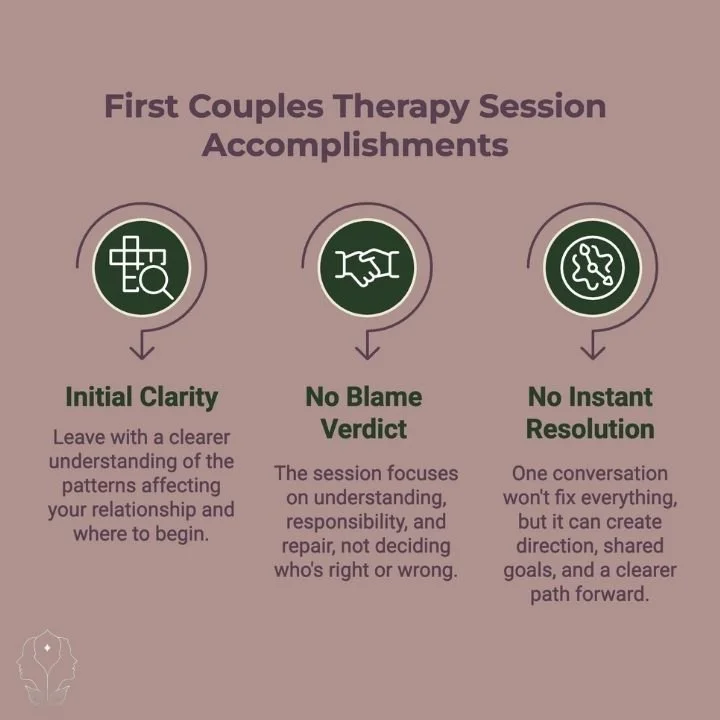
The first session can create clarity, reveal patterns, and establish meaningful goals. Repairing years of hurt takes more than one conversation. Change develops through continued reflection, accountability, and practice inside and outside therapy.
A2020 meta-analysis of 58 studies involving 2,092 couples found large improvements in relationship satisfaction, along with significant gains in communication, emotional intimacy, and partner behavior. The included studies involved opposite-sex couples, so the evidence base does not fully represent every type of relationship.
Initial clarity
The goal is for you to leave with greater clarity about the pattern affecting your relationship and which concerns need attention first.
You may begin recognizing what sits underneath recurring arguments and why familiar conversations keep returning to the same painful place.
No blame verdict
The session focuses on responsibility, impact, and repair. It does not produce a winner and a loser.
I’ll help each of you examine your part in the dynamic while making sure both experiences are heard. Accountability becomes more useful when it leads to understanding and different choices.
No instant resolution
One hour can establish direction. Meaningful change develops as you practice responding differently when the familiar cycle appears.
Your first session should give us a clearer map, focused goals, and a shared understanding of the work ahead.
What happens after the first couples therapy session

At Sacred Healing Counseling, the relationship-mapping appointment begins the structured Couples Foundations Package. Each partner then completes an individual insight session, followed by a 90-minute relationship integration session.
Individual insight sessions
Each partner has space to discuss personal history, emotional triggers, protective responses, and experiences that may be difficult to explain with the other person in the room.
These sessions help me understand what each of you carries into the relationship and how those experiences shape the dynamic between you.
90-minute integration session
After the individual sessions, we meet again for a 90-minute relationship integration appointment.
We connect what we have learned, examine the cycle with greater context, and clarify the next phase of care. This longer session gives us enough time to bring the separate pieces back into the relationship.
Ongoing therapy plan
After the integration session, I’ll recommend the frequency and session length that best fit your current needs and goals.
Some couples continue with ongoing sessions. Couples who need concentrated time to address deeper patterns may benefit from acouples intensive in Florida. The recommendation depends on the relationship, the concerns involved, and the level of support needed.
Start couples therapy in Orlando with a free consultation
You don’t need the perfect explanation or every answer before reaching out. You need enough willingness to look honestly at what is happening and consider a different way of relating to each other.
One conversation gives us a place to begin. I’ll help you slow the pattern down, say what has been difficult to express, and decide what kind of support fits the relationship now.
Book a Free Consultation to see if Sacred Healing Counseling is the right fit for the work ahead.
Frequently asked questions
How do I prepare for my first couples therapy session?
Come ready to speak honestly about what has been happening and what you hope will change. You don’t need a prepared speech or a perfectly organized timeline. Complete the requested intake information, bring any questions you have, and remain open to hearing your partner’s perspective.
What questions do couples therapists ask in the first session?
I’ll ask what brought you to therapy, how each partner experiences the relationship, which patterns keep repeating, and what you want to change. I may also ask about your relationship history, major stressors, previous attempts to resolve the problem, and your goals for therapy.
Will a couples therapist decide who is in the wrong?
No. My role is to understand the dynamic of the relationship, help each partner recognize their contribution, and address harmful behavior directly. The session focuses on accountability, impact, and repair instead of choosing a winning side.
Is it normal to cry during the first couples therapy session?
Yes. Crying is a common response when couples begin discussing hurt, disconnection, fear, or unmet needs. You don’t need to apologize for becoming emotional during the session.
Is it normal to feel strange after the first couples therapy session?
Yes. You may leave feeling emotional, tired, relieved, hopeful, or uncertain. You’ve spent an hour examining your relationship from a different perspective, so give yourself time to process the conversation before deciding what it means.