
23 Signs of Unhealthy Boundaries and What to Do
How do you know if your boundaries are unhealthy? It is easy to think boundaries are just about saying no.
Resentment, exhaustion, guilt, anxiety, and disconnection are usually part of the conversation. You may be giving too much of yourself away. Or you may be keeping people at a distance without realizing it.
Let's look at some signs that your boundaries may need attention.
What are unhealthy boundaries?

Unhealthy boundaries are patterns that disregard your own limits or someone else's, creating imbalance in relationships and emotional well-being.
Boundaries help define where your responsibilities end and another person's responsibilities begin. They influence how you communicate, how much emotional labor you carry, how you handle conflict, and your overall sense of well-being.
When boundaries are too weak, you lose yourself.
When boundaries are too rigid, you lose connection.
Neither feels good for long.
This is not about becoming less caring. It is about stopping the cycle of abandoning yourself.
23 Signs of Unhealthy Boundaries

Boundary problems rarely announce themselves. They usually show up as resentment, exhaustion, anxiety, or the feeling that you are carrying too much for too long.
Signs your boundaries are too weak
Weak boundaries usually show up as self-abandonment. You know what you need, but someone else's needs consistently move to the front of the line.
1. You say yes when you want to say no. You agree to plans, favors, responsibilities, or requests that you do not actually have the time, energy, or desire to take on.
2. You feel responsible for other people's emotions. If someone is upset, disappointed, angry, or frustrated, you immediately feel pressure to make it better.
3. You over-explain your decisions. A simple boundary turns into a five-minute explanation because you feel like your needs require permission.
4. You ignore red flags. You notice behavior that makes you uncomfortable but convince yourself it is not a big deal.
5. You let others define who you are. Your self-worth shifts depending on someone else's approval, opinion, or reaction.
6. You allow others to direct your life choices. Career decisions, relationships, goals, and priorities become shaped by what keeps other people comfortable.
7. You feel guilty for prioritizing yourself. Rest feels selfish. Saying no feels mean. Protecting your energy feels wrong.
8. You tolerate behavior that goes against your values. You stay quiet to avoid conflict, even when something clearly crosses a line.
9. You constantly look for validation. Praise feels necessary before you can trust your own judgment.
10. You overshare too quickly. Deep vulnerability gets fast-tracked before trust has actually been built.
11. You become emotionally attached very quickly. Attention feels like a connection. Connection feels like commitment. And suddenly you are invested in someone you barely know.
12. You accept things you do not actually want. That might be gifts, favors, physical affection, extra responsibilities, or emotional labor.
13. You give until you are exhausted. You keep showing up long after your capacity is gone. Then resentment starts showing up, too.
14. You do not notice when someone is taking too much. Your time, energy, emotional support, and attention become available without limits.
Signs your boundaries are too rigid
Rigid boundaries are built for protection. The problem is that what protects you from hurt can also block connection.
15. You struggle to trust anyone. Trust is earned. But if nobody gets the chance to earn it, relationships stay distant.
16. You keep emotional walls up. People know facts about you, but very few people know you.
17. You refuse help. You carry everything yourself because relying on someone else feels uncomfortable.
18. You avoid vulnerability. Sharing fears, needs, disappointments, or insecurities feels risky. So you keep them to yourself.
19. You shut people out when life gets hard. Instead of reaching for support, you disappear. You isolate. You handle it alone.
Signs you may be crossing someone else's boundaries
Boundary work is not just about protecting yourself. It is also about respecting the limits, needs, and autonomy of other people.
20. You push past someone's no. When someone says no, you keep persuading, pressuring, negotiating, or trying to change their mind. It is easy to confuse controlling behaviors with healthy boundaries. A boundary is not an invitation to debate.
21. You assume physical contact is welcome. Hugs, touching, or physical affection should never be assumed. What feels harmless to you may feel uncomfortable to someone else.
22. You expect people to know what you need without telling them. Unspoken expectations create frustration because other people cannot read your mind. Healthy boundaries require clear communication.
23. You take more than you give. You lean on someone for support, time, energy, or help, but rarely stop to consider what they may need. Healthy relationships involve giving and receiving, not just one person carrying the load.
Why are unhealthy boundaries so hard to change?
Unhealthy boundaries are hard to change because they start as a way to protect yourself, stay connected, or get your needs met.
Maybe saying no created conflict.
Maybe vulnerability led to disappointment.
Maybe helping everyone else became part of how you measured your value.
The behavior makes sense when you look at where it came from. The problem is that it may no longer be helping you.
This is why boundary work can feel uncomfortable. You're not just changing a behavior. You're changing a strategy that may have helped you navigate relationships for years.
How to start building healthier boundaries
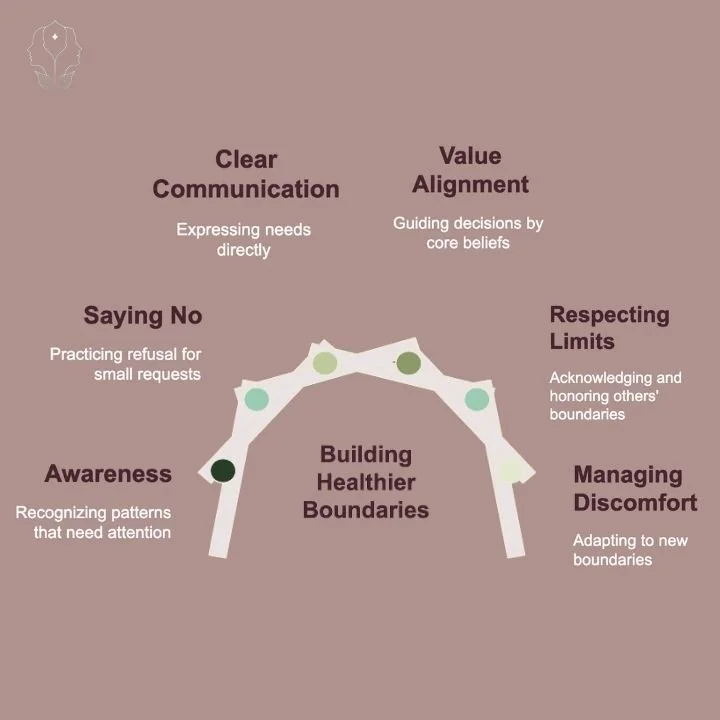
Building healthier boundaries starts with awareness. You cannot change a pattern you do not recognize. Start here:
Pay attention to resentment. Resentment is usually a clue that a boundary needs attention.
Notice where you feel drained, overwhelmed, or taken for granted.
Practice saying no to small requests before tackling bigger ones.
Stop explaining every boundary. A simple and respectful no is enough.
Get clear on your values and let them guide your decisions.
Ask for what you need instead of expecting people to guess.
Respect other people's limits, even when you do not like their answer.
Expect some discomfort. New boundaries can feel unfamiliar before they feel natural.
Healthy boundaries will allow you to communicate your needs without taking responsibility for someone else's reaction.
If these patterns feel difficult to change on your own, therapy can provide a space to better understand where they come from and respond differently.
Set Boundaries That Hold With Therapy in Florida
Boundary patterns do not change overnight, but they can. The first step is recognizing what is no longer working and getting honest about what needs attention.
You deserve relationships where your needs, limits, and feelings have space too.
Sacred Healing Counseling helps women and couples identify the patterns that keep them stuck and build healthier ways of relating to themselves and others.
Book a Free Consultation if you're ready to work on your boundaries.
Frequently asked questions
Why do I struggle to set boundaries?
You likely learned that keeping others comfortable was safer than expressing your needs. Boundary struggles are connected to relationship patterns, not a lack of confidence or strength.
What's the difference between weak boundaries and rigid boundaries?
Weak boundaries make it difficult to protect your needs. Rigid boundaries make it difficult to connect with others. Healthy boundaries create space for both self-respect and connection.
What are examples of unhealthy boundaries in relationships?
Examples include avoiding difficult conversations, expecting mind-reading, ignoring your own needs, accepting disrespect, or treating someone's limits as negotiable. These patterns often create resentment and conflict.
How do I know if the signs of unhealthy boundaries are affecting my daily life?
Frequent resentment, exhaustion, anxiety, people-pleasing, decision fatigue, and recurring relationship conflict are common clues. These patterns can affect your emotional well-being, relationships, and daily functioning.
Can therapy help me set boundaries without guilt?
Yes. Therapy helps you understand why guilt appears, challenge unhelpful beliefs, and practice healthier boundaries. The goal is learning to tolerate discomfort without abandoning your needs.