
Gottman Method couples therapy is a structured approach developed by Drs. John and Julie Gottman. It starts with a relationship assessment, then uses practical exercises to strengthen friendship, manage conflict, and build shared meaning.
You can love each other and still dread bringing something up. A question about dinner becomes an argument about effort. One person pushes for a conversation, the other shuts down, and somehow you end up exactly where you started. In couples therapy, I draw on the Gottman Method to help you catch that pattern and try a different response.
The Sound Relationship House framework

The Sound Relationship House uses seven floors to show how a relationship is built. Trust and commitment are the two walls supporting those floors. In therapy, the framework helps you and your therapist decide which area needs attention first.
Friendship and emotional connection
The first three floors cover building Love Maps, sharing fondness and admiration, and turning toward each other. You stay curious about your partner’s inner world and show appreciation that sounds like you.
You also notice small bids for connection, like a sigh or a comment about a rough meeting, and respond. The fourth floor, the Positive Perspective, is about giving your partner the benefit of the doubt in ordinary interactions.
Conflict management and repair
The fifth floor is about managing conflict. The framework separates problems you can solve from recurring differences you’ll keep managing over time. The Gottmans call four patterns that can derail a conversation the Four Horsemen. They’re criticism, contempt, defensiveness, and stonewalling.
Repair means interrupting the exchange before it escalates and returning to the concern. You might say, “Can we slow down? I want to hear what you were trying to say.”
Shared meaning, trust, and commitment
The top of the house is about the life you’re building. The sixth floor is about supporting each other’s dreams. The seventh is about creating shared meaning through the rituals and values that make your relationship feel like yours.
Trust means believing your partner will follow through when you need them. Commitment shows up in what you do, especially when life gets hard.
How Gottman Method couples therapy works
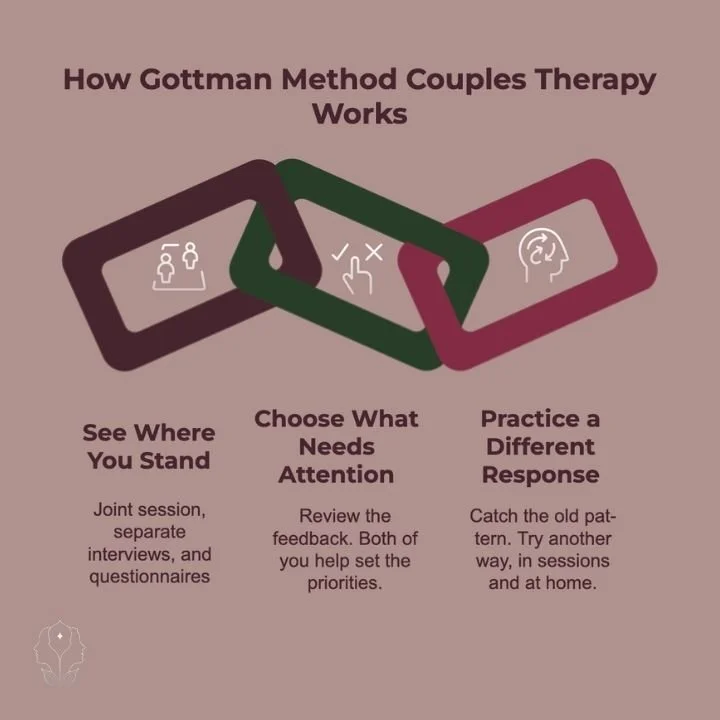
Assess relationship strengths and challenges
A Gottman assessment starts with a joint session, followed by separate interviews with each partner and questionnaires. Your therapist may also observe how you discuss a disagreement and ask about friendship, trust, conflict, and safety.
Review feedback and treatment priorities
Your therapist explains what the assessment shows, and you decide what to work on first. That could mean slowing down arguments, working through betrayal, or rebuilding everyday connection. You both get to say what you want from therapy.
Practice new responses in sessions and daily life
In session, you try a different response while the old pattern is still happening. Your therapist can pause the exchange, point out what’s happening between you, and guide you through another attempt. Practice between sessions shows which changes hold up under everyday stress and which need more work.
Gottman Method exercises you can practice

Love Map questions, softened start-ups, and stress-reducing conversations are three examples of Gottman Method exercises you may practice.
Love Map questions
Love Maps keep you current on your partner’s world. Ask things like, “What’s been taking the biggest toll on you lately?” or “What are you looking forward to?” Then make room for the answer.
Softened start-ups
A softened start-up helps you raise a concern by naming what you noticed, how you feel, and what you need. For example, “I feel overwhelmed handling bedtime alone. Could we agree on which nights each of us will handle it?”
Stress-reducing conversations
A stress-reducing conversation focuses on stress that starts outside the relationship, like work or family pressure. Take turns listening and showing real interest before offering advice.
Save unresolved relationship conflict for a separate conversation.
Is the Gottman Method effective?

The Gottman Method can help some couples experiencing relationship distress. The research is promising, with modest support from a small number of controlled studies.
What outcome studies suggest
A 2026 systematic review of couples therapy models found three small randomized trials of Gottman couples therapy that met its criteria. Gottman therapy outperformed inactive comparison groups at the end of treatment, and one trial reported gains in marital adjustment and intimacy.
What the research cannot establish
All three trials were conducted in Iran. Follow-up evidence was limited to one trial that reported gains were maintained at one month. Only one of the three trials compared Gottman therapy with another active treatment. Larger studies in more varied settings would help clarify how well the results generalize and how long the benefits last.
When couples therapy is not the right starting point
When abuse, coercive control, or fear of retaliation makes it unsafe to speak honestly, confidential support and safety planning come first. The National Domestic Violence Hotline explains the risks of attending couples therapy with an abusive partner.
An immediate mental health crisis or severe intoxication may need attention before joint sessions can begin. If one of you is unsure about staying in the relationship, bring that up before starting exercises designed to strengthen it.
Address recurring patterns with Gottman-informed care
You can explain the problem clearly and still end up in the same fight. I slow the conversation down so we can work with what’s happening between you, including the feelings beneath defensiveness and withdrawal. My training includes Gottman Method Levels 1 and 2 and Emotionally Focused Therapy (EFT) Foundations.
I offer online couples therapy in Florida and South Carolina and in-person couples intensives in Central Florida. Book a free consultation or call (321) 413-3482 to talk through what you’ve tried and which format fits your needs.
Frequently asked questions about Gottman Method couples therapy
Which is better for couples, the Gottman Method or EFT?
The better fit depends on what you need from therapy. The Gottman Method emphasizes structured assessment and practical tools for friendship and conflict. Emotionally Focused Therapy focuses on attachment needs and the emotional patterns couples get stuck in. The 2026 review found one small trial that compared the two and favored EFT at the end of treatment. More direct comparisons would help clarify which couples benefit most from each approach.
How many sessions does Gottman Method couples therapy take?
There’s no universal session count. The severity of your concerns, your treatment priorities, and what happens between appointments all affect the timeline. Your therapist should explain the starting plan, review progress with you, and adjust as needed.
Can you practice Gottman Method exercises without a therapist?
Yes. You can try basic exercises like Love Map questions or conversations about outside stress at home. Keep participation voluntary and pause if the exercise becomes another argument. If conversations repeatedly escalate or trust has been badly damaged, consider speaking with a clinician about what support fits.
Are Gottman’s seven principles the same as the Sound Relationship House?
They’re closely related. The Seven Principles for Making Marriage Work is a book that gives couples practical relationship guidance. The Sound Relationship House organizes related ideas into a framework therapists can use to assess a relationship and plan treatment.
Does Gottman training mean a therapist is certified?
No. Completing a Gottman training level is one step in professional development. Becoming a Certified Gottman Therapist requires completing a separate certification process that includes consultation and review of recorded clinical work.